Network
Artists, researchers, technologists, and community organisers contributing to Intelligences from the Underground.
If you would like to be included in the network moving forward, please use the Get in Touch form with your email and a short note about what you might like to do.
Anna Xambó
annaxambo.me
Open bio
Brice Catherin
akouphene.org
Open bio
Colin Frank
colinfranksounding.com
Open bio
Colin Frank is a percussionist, composer, and sound artist whose work explores found objects, environmental noise and immersive technology. His texturally rich percussion playing and noise compositions have been presented at the Huddersfield Contemporary Music Festival, CTM Berlin, Beast Feast, and Percussive Arts Society Day of Percussion. He has been commissioned by the International Contemporary Ensemble, Moscow Contemporary Music Ensemble, TAK, and AndPlay, and has exhibited at New Adventures in Sound Art, Le Vivier festival, Analix Forever, and Salem Art Works.
He holds a PhD from the University of Huddersfield, teaches percussion and composition at Leeds Conservatoire, and is winner of the Hildegard Westerkamp Award for sound composition.
Jonathan O'Hear
jonathan.ohear.com
Open bio
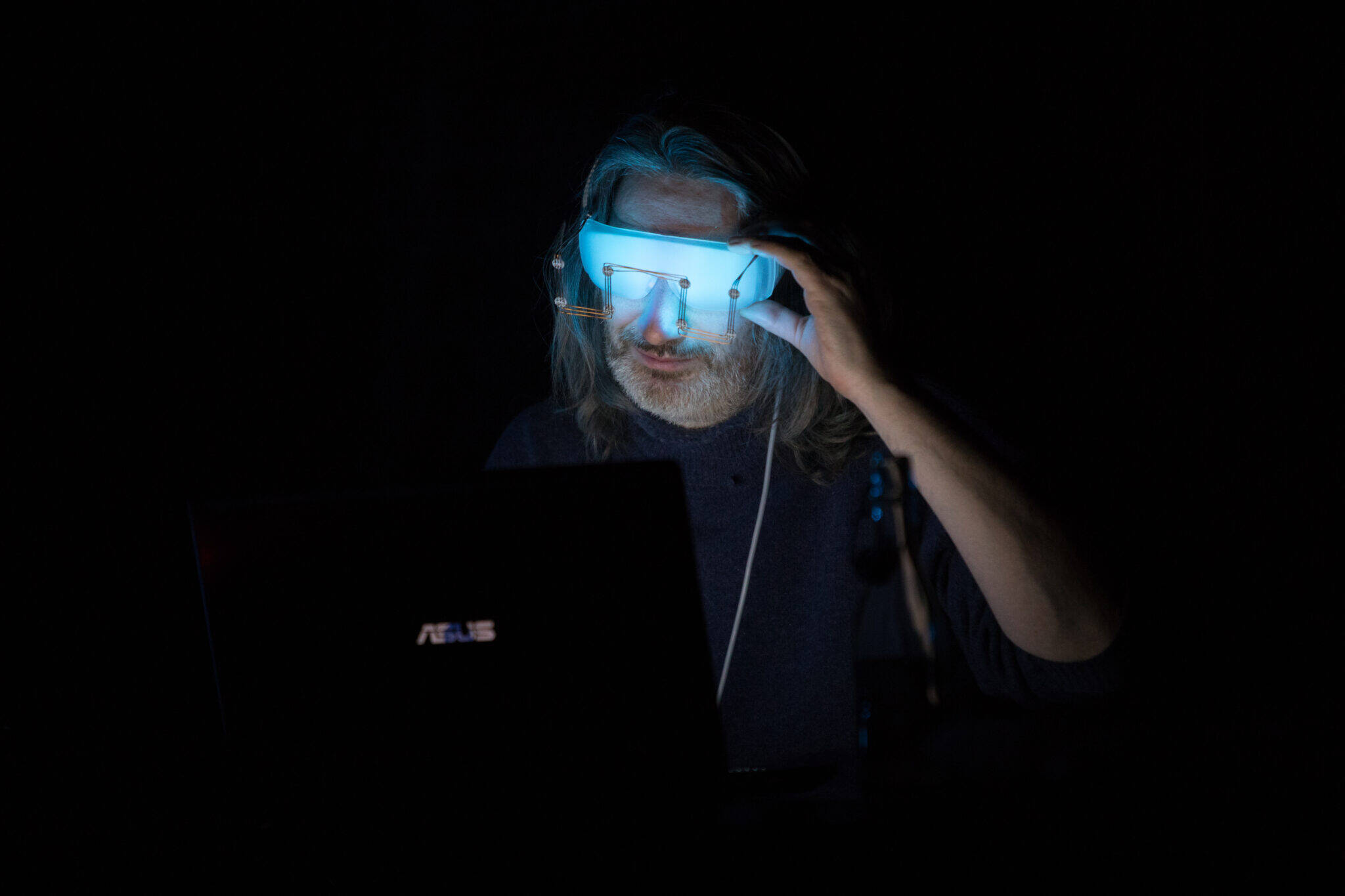
Jonathan O’Hear is a multidisciplinary artist whose work is often experiential and technological. In 2022 he co-founded the association de Malfaiteurs with Brice Catherin. In 2021 he founded and directed the AiiA festival with Laura Tocmacov, focusing on the arts and culture of Artificial Intelligence. At the end of 2017 he launched the Dai project — an artificial intelligence performance robot — presented in Switzerland, Ireland and India. Between 2013 and 2018 he was co-artistic director of the contemporary dance company Neopost Foofwa.
His work has been shown at the CCS Paris, Musée Tinguely Basel, Villa Bernasconi Geneva, Fonderie Kugler Geneva, Médiathèque de Biarritz, Fluxum Geneva, Analix Forever Geneva, CAC Geneva, Max Mueller Delhi, and the Science Art Gallery Dublin. He also gives workshops internationally on the use of space and light as an artistic medium.

Kate Steenhauer
katesteenhauer.com
Open bio
Kate Steenhauer is a multidisciplinary artist, filmmaker, and engineer working at the intersection of visual art, performance, technology, and artificial intelligence. Born in the Netherlands, she holds an MSc in Civil Engineering from Delft University of Technology and a PhD in Coastal Engineering and Computational Fluid Dynamics from the University of Aberdeen.
Her practice moves visual art beyond static forms into dynamic, interactive, and transformational experiences. Central to her work is collaborative storytelling: integrating evolving visual art with music to create temporal works developed through community-engaged productions exploring oral history, policy, gender politics, technology, and activism. Her technical background shapes her interest in explainable and sustainable AI. Her project Painting Music, created with AI developers Dr. Starkey and Jack Caven, uses human-inspired AI to translate live painted marks into music in real time.
Maria Guerra Sappho
mariasappho.com
Open bio
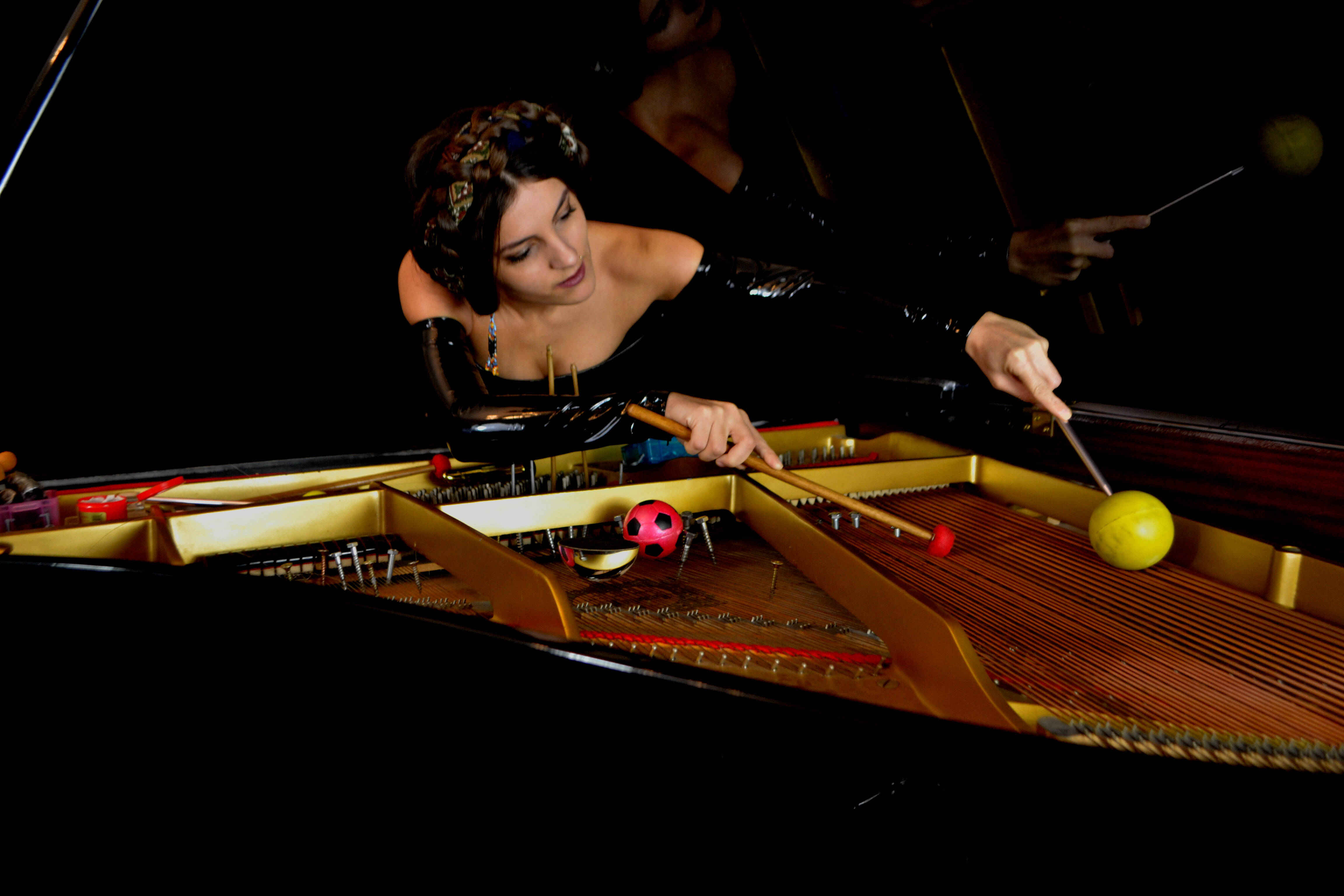
Maria Guerra Sappho is an artist and researcher exploring techno-social communities, experimental instrument-building, and artificial intelligence in creative practice. Her work navigates diaspora, ecology, cultural memory, and postcolonial histories through posthuman feminist and techno-moral lenses.
Maria currently leads the Syzygy project (Immersive Arts UK funded), a Mixed Reality-based ecological storytelling installation, and is Composer-in-Residence with the Bahué Duo (USA). She co-founded Chimère Communities, establishing grassroots AI art hubs across Lesotho, South Africa, Switzerland, and the UK. Internationally recognised as a composer and performer, she has performed with Mogwai and the International Contemporary Ensemble, and is a long-serving member of the Glasgow Improvisers Orchestra. Recent works include The Tentaculae (Creative Climate Award nominee, NYC), The Ostoyae (UNESCO Week of Sound), and Zemi (Huddersfield Contemporary Music Festival).
Her awards include the BBC Daphne Oram Award, the AiiA AI Prize (Switzerland), and the MANE Emerging Composer Prize (Australia) and the Share Prize (Italy). She is co-author of New Directions in Musical Collaborative Creativity (Oxford University Press, 2025).
Martin Parker
tinpark.com
Open bio
Pierre Alexandre Tremblay
pierrealexandretremblay.com
Open bio
Pierre Alexandre Tremblay (Montréal, 1975) is a composer and performer on bass guitar and electronic devices, in solo and group settings, between electroacoustic music, contemporary jazz, mixed music and improvised music. He also worked in popular music, and practises creative coding.
Pierre Alexandre was Professor of Composition and Improvisation at the University of Huddersfield from 2005 to ‘24, where he led the Fluid Corpus Manipulation project (flucoma.org). In September 2024, he joined the Conservatorio della Svizzera italiana as a research professor in composition.
He likes spending time with his family, reading prose, and going on long walks.
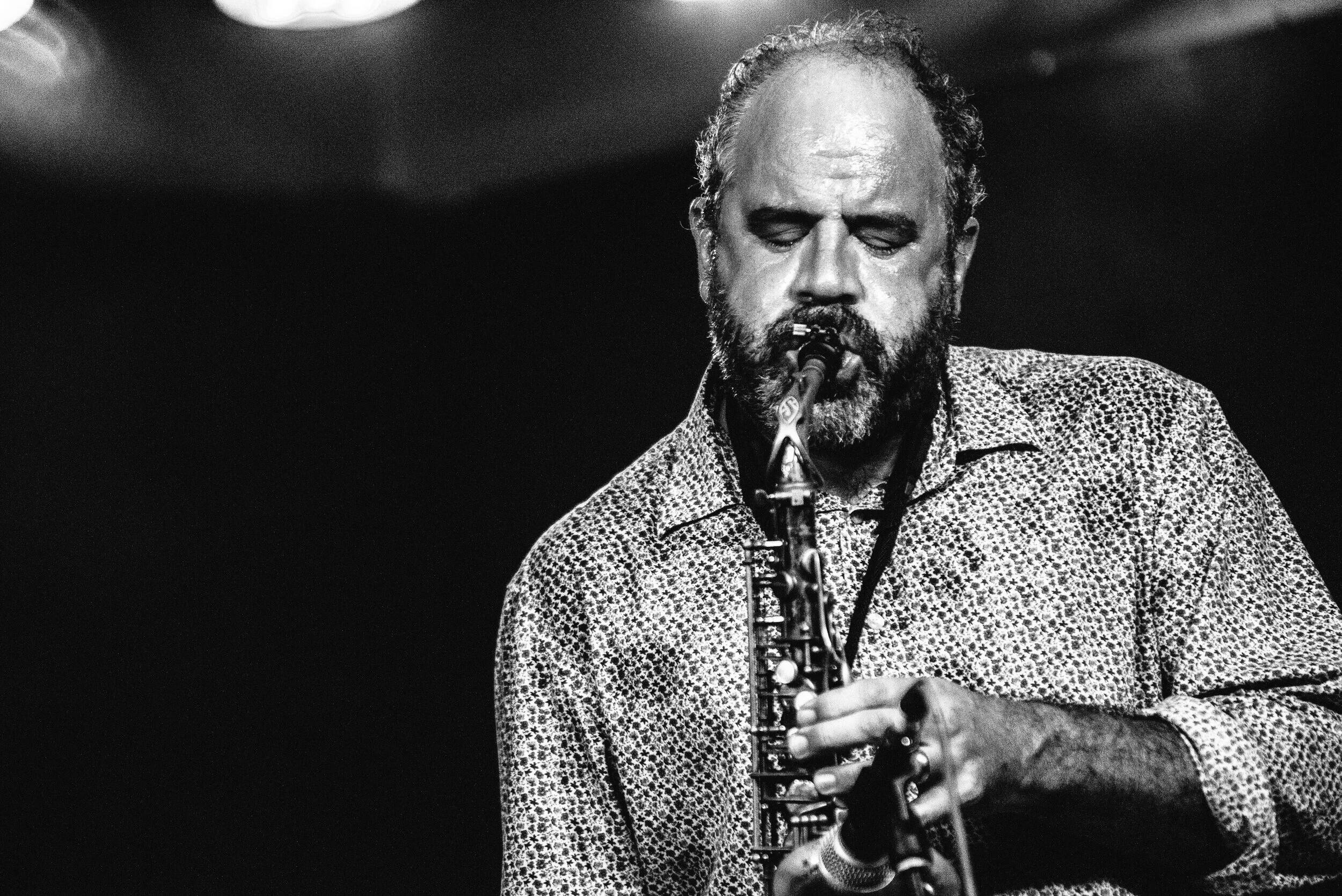
Raymond MacDonald
raymondmacdonald.co.uk
Open bio
Raymond MacDonald is a saxophonist, composer and academic whose work explores the boundaries and ambiguities between what is conventionally seen as improvisation and composition. Much of his recent performing work has been in collaborative free improvisation contexts, however his roots in jazz and pop music are always evident in his playing and writing. MacDonald collaborates widely and has worked with visual artists, dancers, writers and filmmakers and has produced music for film, television, theatre and the concert hall.
MacDonald has worked internationally with many of the current pioneers in avant-garde music including Marilyn Crispell, Günter ‘Baby’ Sommer, David Byrne, Damo Suzuki from Can, Nurse with Wound, Axel Dorner, George Lewis, Tatsuya Nakatani, Michael Zerang, and Fred Lonberg-Holm. His ambitious International Big Band features Satoko Fujii, Natsuki Tamura, Alistair Spence, Toby Hall, Lloyd Swanton from The Necks, and Jim O’Rourke. In 2010 he released Buddy on the French label Textile, named in top CDs of the year by Wire, Jazzwise, and All About Jazz.
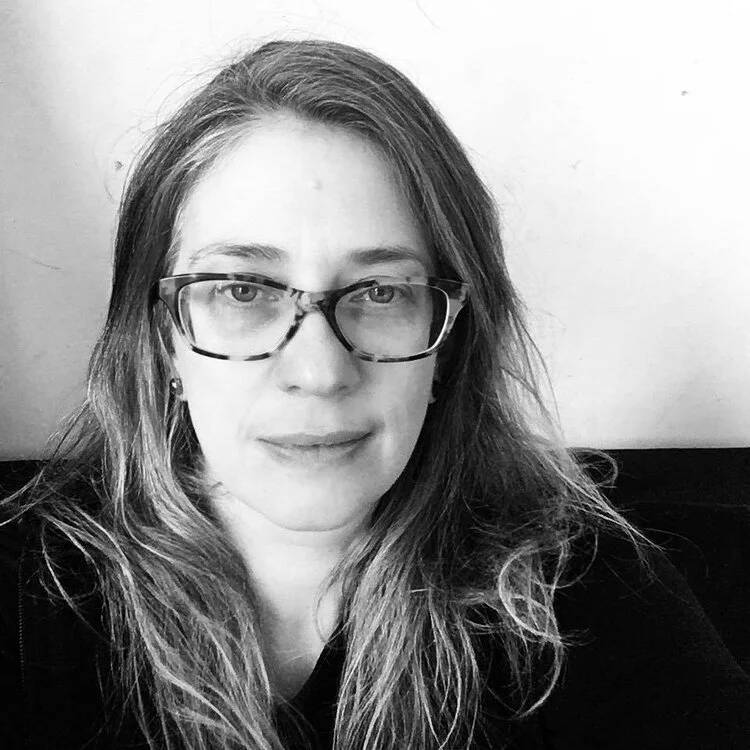
Una MacGlone
unamacglone.co.uk
Open bio
Dr Una MacGlone is a researcher and creative musician. As a founder member of Glasgow Improvisers Orchestra, she devises pieces using improvisation as the central creative process. As a double bassist, she has collaborated across genres and is on over 25 commercially available recordings.
Her research interests include improvisation, pedagogy, and the social and wellbeing effects of creative music making. She is co-editor of Expanding the Space for Improvisation Pedagogy (Routledge, 2019) and has published in several Music Psychology and Education journals. From 2021–24 she held a British Academy Postdoctoral Fellowship investigating processes of inclusion and wellbeing impacts from community music workshops with children and young people with additional support needs.
Una has an international profile as a teacher of free improvisation, and has given workshops and lectured across Europe and North America.